Every “AI API pricing comparison” article on the internet has the same expiration date problem: it lists specific dollar figures for specific models, and within a few weeks, at least one of those providers has cut prices, deprecated a model, or launched a new tier that makes the whole table wrong. This isn’t a hypothetical. Checking current rates while researching this piece, three different sources published within days of each other quoted three different prices for the same OpenAI model, because the price had actually changed twice in that window. A calculator that hardcodes today’s rates would be misleading you by next month.
So this one doesn’t. Instead of a static table, you enter the current rate for whatever model or provider you’re evaluating, copied straight from that provider’s own pricing page, and the tool does the actual comparison math. It stays accurate regardless of how often providers change their pricing, which as it turns out right now, is often.
Compare Real Monthly Costs
Step 1: Estimate your usage
Step 2: Enter rates for up to 3 models (per 1M tokens, USD)
How the Estimate Works
A token is roughly three-quarters of an English word, which means converting a rough word count into tokens is a matter of dividing by 0.75, not a one-to-one match. This is why a 500-word prompt isn’t 500 tokens, it’s closer to 667. The distinction matters because every provider bills input and output tokens separately, and at different rates, almost always with output priced several times higher than input, since generating text is more computationally expensive than reading it.
The “input” side of most real applications includes more than just what a user typed. It includes the system prompt (instructions sent on every single request, often invisible to the end user), any retrieved context in a RAG setup, conversation history in a multi-turn chat, and the user’s actual message. It’s common for developers estimating cost for the first time to count only the user-visible message and end up underestimating their real input cost by a wide margin, particularly for anything doing retrieval-augmented generation with a few paragraphs of retrieved context injected into every request.
Real Scenarios Worth Running Through the Calculator
A customer support chatbot
Typically has a moderate system prompt (context about the company and tone), a short user message, and a handful of turns of conversation history that grows each message. Input tokens per request tend to grow over the course of a conversation, so estimate using an average-length conversation turn, not just the first message, or you’ll underestimate cost for anything beyond a single-turn interaction.
A code review or code generation feature
Input tokens here can be substantial, since a meaningful chunk of surrounding code often needs to go into the prompt for the model to give a useful answer. A single file of a few hundred lines can easily run several thousand tokens on its own, before any system prompt or instructions are added. This is a case where input cost frequently dominates the total bill, unlike a short-message chatbot where output cost tends to dominate.
A content generation feature (summaries, product descriptions, drafts)
Output-heavy by nature, since the whole point of the feature is generating substantial text. This is where the output token rate matters most, and where the price gap between a budget and flagship model tier tends to show up most dramatically in a monthly bill, since output is priced several times higher than input on nearly every provider.
A retrieval-augmented search or documentation assistant
Often the most input-heavy of all these examples, since a genuinely useful answer usually requires several paragraphs of retrieved source material injected into the prompt alongside the user’s question. It’s worth running this scenario through the calculator with a realistic context size (a few thousand words of retrieved material isn’t unusual) rather than the same short input estimate you’d use for a simple chatbot.
Where Real Bills Diverge From the Estimate
Caching can change the math significantly
Several providers now offer a discounted rate for cached input tokens, meaning repeated content across requests (a long, unchanging system prompt, for instance) can be billed at a fraction of the standard input rate on subsequent calls. If your application sends a large, mostly-unchanging prompt prefix on every request, actual costs can end up considerably lower than a naive calculation assumes, and it’s worth checking whether your chosen provider offers this and whether your usage pattern actually benefits from it.
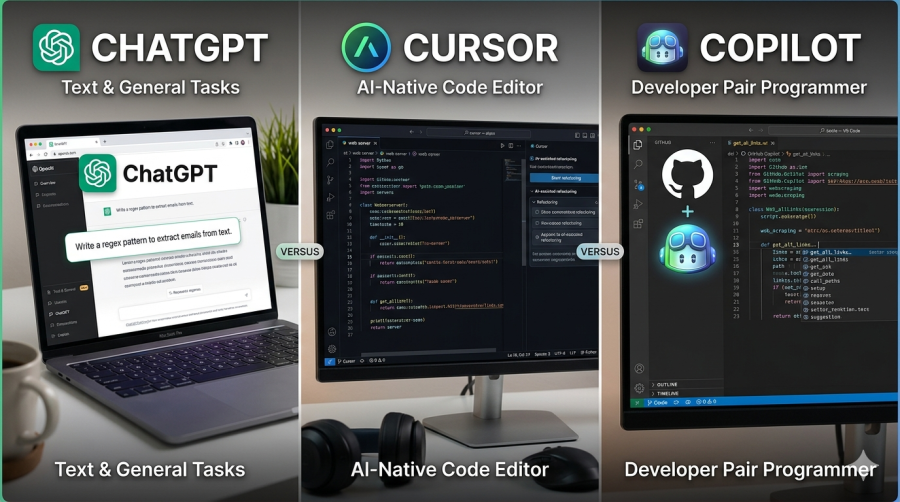
Retries and regenerations also push real bills above the naive estimate. If a cheaper model needs a second attempt more often because its first response misses the mark, or if your application implements retry logic for malformed outputs, those retried calls cost real money too, and a model that looks cheaper per token can end up costing more per successfully completed task once retry rates are accounted for. This is worth testing empirically against your actual use case rather than assuming the lowest per-token price is automatically the lowest total cost. For more context on picking between providers for development work specifically, this comparison of AI coding assistants covers the qualitative side of that decision.
Common Mistakes When Estimating AI API Costs
Forgetting that system prompts count as input tokens on every single request is one of the more common ones, particularly once an application has accumulated a long, detailed system prompt over time. A 300-word system prompt sent on 50,000 monthly requests adds roughly 20 million billed input tokens a month that a naive “just the user’s message” estimate would miss entirely.
Comparing only the input rate between providers, without weighting for output rate, is another frequent one. Since output tokens are almost always priced several times higher than input, a model with a slightly higher input rate but a dramatically lower output rate can easily come out cheaper overall for an output-heavy feature like content generation, even though the input number alone looks worse at first glance.
And treating a single benchmark month as representative of ongoing cost is a mistake that catches growing products off guard. Request volume for a successful feature tends to grow, and growth in requests scales cost linearly in a way that’s easy to underestimate when you’re only looking at current usage rather than a reasonable growth projection over the next six to twelve months.
FAQ
Why does output cost more than input for most AI models?
Generating each output token requires a full forward pass through the model, while input tokens can be processed more efficiently in parallel during the initial prompt processing step. This computational difference is reflected directly in most providers’ pricing, with output typically priced several times higher than input.
How accurate is the words-to-tokens conversion?
Roughly three-quarters of a word per token is a reasonable estimate for typical English text, but it varies with content type. Code, non-English text, and text with unusual formatting or lots of punctuation can tokenize less efficiently than plain English prose, so treat the conversion as a solid estimate rather than an exact figure.
Should I always pick the cheapest model tier?
Not automatically. A cheaper model that produces lower-quality output more often, requiring retries, edits, or a fallback to a stronger model, can cost more per successfully completed task than a pricier model that gets it right the first time. Total cost per successful outcome matters more than the raw per-token rate.
Do free tiers or trial credits change this calculation?
Only temporarily. Trial credits are useful for testing and prototyping, but they don’t reflect ongoing production cost, so budget using the paid per-token rate rather than assuming free credits represent your real long-term cost.